javascript
49 lines · 9 steps
Versioned state migrations in localStorage
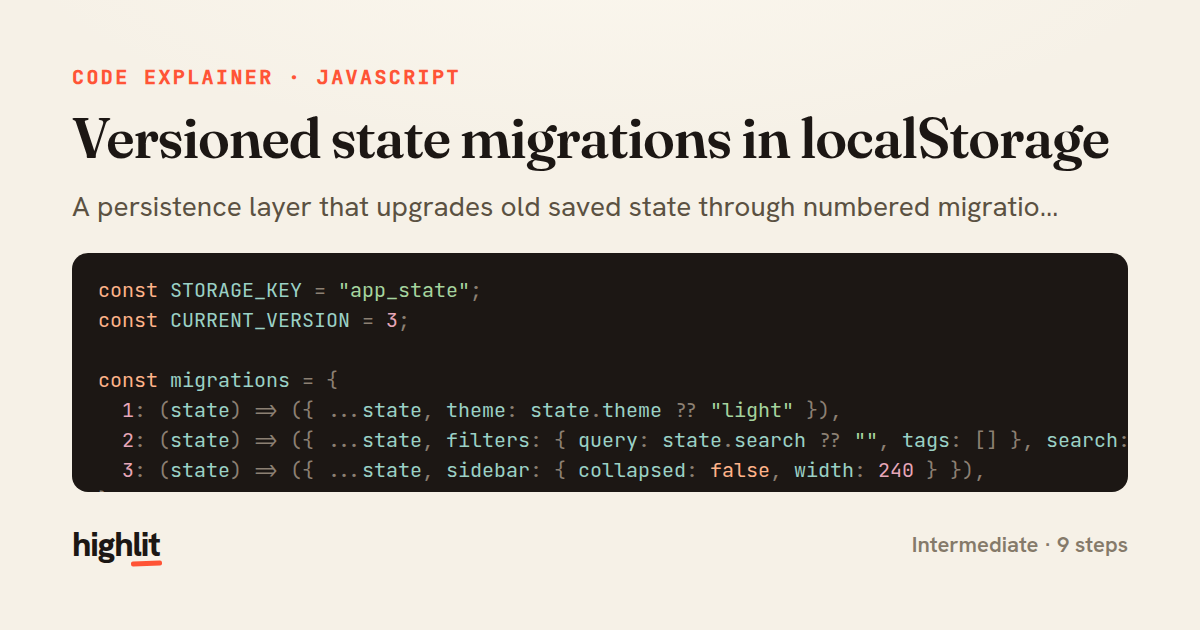
A persistence layer that upgrades old saved state through numbered migration steps before handing it to the app.
Explained by
highlit
1const STORAGE_KEY = "app_state";
2const CURRENT_VERSION = 3;
3
4const migrations = {
5 1: (state) => ({ ...state, theme: state.theme ?? "light" }),
6 2: (state) => ({ ...state, filters: { query: state.search ?? "", tags: [] }, search: undefined }),
7 3: (state) => ({ ...state, sidebar: { collapsed: false, width: 240 } }),
8};
9
10function migrate(state, fromVersion) {
11 let migrated = state;
12 for (let v = fromVersion + 1; v <= CURRENT_VERSION; v++) {
13 const step = migrations[v];
14 if (step) migrated = step(migrated);
15 }
16 return migrated;
17}
18
19export function loadState(defaults) {
20 const raw = localStorage.getItem(STORAGE_KEY);
21 if (!raw) return { ...defaults };
22
23 try {
24 const { version = 0, data } = JSON.parse(raw);
25 if (version === CURRENT_VERSION) return { ...defaults, ...data };
26
27 const upgraded = migrate(data, version);
28 const state = { ...defaults, ...upgraded };
29 saveState(state);
30 return state;
31 } catch (err) {
32 console.warn("Corrupt persisted state, resetting", err);
33 localStorage.removeItem(STORAGE_KEY);
34 return { ...defaults };
35 }
36}
37
38export function saveState(data) {
39 const payload = JSON.stringify({ version: CURRENT_VERSION, data });
40 try {
41 localStorage.setItem(STORAGE_KEY, payload);
42 } catch (err) {
43 if (err.name === "QuotaExceededError") {
44 console.error("localStorage quota exceeded, state not saved");
45 } else {
46 throw err;
47 }
48 }
49}
01 / 01
STEP 01
‹ swipe to step through ›
Walkthrough
Space play
←→ step
click any line
Three takeaways
- 1Tagging persisted data with a version number lets you evolve its shape without breaking existing users.
- 2Chaining small pure migration functions keeps each schema change isolated and testable.
- 3Persistence code should treat stored data as untrusted and degrade gracefully to defaults on corruption.
Related explainers
rust
use serde::Deserialize;

#[derive(Debug, Deserialize)]
#[serde(untagged)]
Parsing flexible JSON shapes with serde
deserialization
enums
json
Intermediate
6 steps
ruby
require "shellwords"
require "open3"

module Backup
Building safe shell commands in Ruby
shell-out
subprocess
command-injection
Intermediate
7 steps
javascript
function evaluate(expression) {
  const tokens = tokenize(expression);
  let pos = 0;
Building a recursive descent calculator
parsing
recursion
operator-precedence
Intermediate
8 steps
typescript
import { Injectable, effect, signal, computed } from '@angular/core';

interface Preferences {
  theme: 'light' | 'dark';
A signal-based preferences store in Angular
signals
state-management
persistence
Intermediate
7 steps
javascript
import { useState, useEffect, useCallback, useRef } from 'react';

const cache = new Map();
const inflight = new Map();
Building a stale-while-revalidate hook in React
caching
request-deduplication
custom-hooks
Advanced
10 steps
rust
use chrono::{Duration, NaiveDate};

#[derive(Debug)]
pub struct DateRange {
Parsing and iterating date ranges in Rust
error-handling
iterators
parsing
Intermediate
7 steps
Share this explainer
Here's the card — post it anywhere.
Made with highlit — turn any snippet into a walkthrough like this in about a minute.
Explain your code
Embed this explainer
Drop the interactive walkthrough into a blog or docs. Views never cost a credit.
<iframe src="https://highlit.co/explainers/versioned-state-migrations-in-localstorage-explained-javascript-4506/embed?autoplay=1" width="100%" height="520" loading="lazy" style="border:0"></iframe>
Autoplay is on by default — add ?autoplay=0 to start paused.